


Business Continuity Solutions
Our continuity solutions are actionable, utility-tested, and aligned with regulatory and emergency management expectations—delivering confidence that critical services will endure, even under pressure.
Disruptions do not stop at the incident
Gradient Planning helps water and wastewater utilities maintain essential operations through power outages, cyber events, staffing shortages, and extended emergencies.
What You Do Not Want:
Single point of failure in staffing, power, vendors, or critical systems
Unclear roles and decision authority during disruptions or interruptions
Untested plans and assumptions that do not reflect real world
Gaps in internal and customer communications when normal systems are unavailable
We develop department-specific continuity strategies that protect treatment, distribution, billing, and customer communications during disruption. Grounded in real utility operations, our approach identifies critical functions, dependencies, and decision points—so staff can sustain essential services and leadership can maintain control when normal operations are compromised.
Practical, department-level continuity strategies

Business Impact Assessment
Identify critical functions, dependencies, and recovery priorities to understand where disruptions will cause the greatest operational and financial impact.

Department-level Business Continuity Planning
Develop clear, role-specific continuity strategies for treatment, distribution, billing, IT, customer service, and other departments—so essential functions continue during extended disruptions.
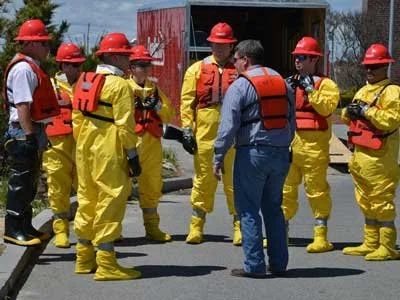
Continuity Testing & Continual Improvement
Validate continuity assumptions through scenario-based reviews and exercises, then refine procedures to strengthen recovery timelines and decision-making.
What you'll receive

Business Impact Report
A documented assessment that supports regulatory risk and resilience requirements while showing how disruptions affect essential functions, staffing, supply chain dependencies, and the utility’s ability to sustain its mission.

Department-level Continuity Plans
Practical, role-specific continuity plans for critical departments that define priorities, workarounds, and decision authority so staff can sustain operations during prolonged or non-routine disruptions.
Continuity Implementation Roadmap
A prioritized, actionable roadmap that identifies near-term fixes and longer-term investments to strengthen continuity, reduce single points of failure, and guide leadership decision-making.
“Exceptional Partner”

“The City of Framingham’s Water & Wastewater Department has been working with Gradient Planning each year since 2017 on all aspects of risk management. Gradient Planning has been an exceptional partner to Framingham, offering practical solutions-focused planning that consistently strengthens our overall preparedness. Their deep subject-matter expertise and willingness to respond to our evolving needs, has allowed Framingham to progressively work toward our preparedness goals and continue to maintain compliance along the way.”
Kate Lancraft, P.E., C.S.P.
Founder and Managing Director
Gradient Planning, LLC
“Gradient Planning has exceeded our expectations in every aspect of emergency preparedness consultancy. Kate Lancraft provides a comprehensive approach, attention to detail, and tailored programs that ensure our organization is empowered to handle any scenario with confidence. From risk assessments to customized training sessions, Kate has been a partner to our team. With unparalleled expertise and dedication to our safety and resilience, it is clear that Gradient Planning is committed to our continual improvement. Without hesitation, I highly recommend Gradient Planning to any organization serious about safeguarding its future.”
25+
years supporting critical infrastructure resilience
Deep, sustained experience helping water and wastewater utilities manage risk, maintain continuity, and meet evolving regulatory expectations.
100%
regulatory acceptance of risk assessments and ERPs
All assessments and emergency response plans accepted by EPA and state regulators with zero corrective follow-up required.
50+
utilities served across small, mid-size, and large systems
Trusted by utilities in New England and beyond to deliver practical, solutions-focused planning tailored to real operational conditions.
Common questions about business continuity
-
Emergency Response Plans focus on managing the incident itself, for example: command, notifications, and immediate response actions. Business continuity planning addresses how essential utility functions continue during and after the disruption, including staffing, treatment operations, supply chain dependencies, billing, and decision authority during prolonged or non-routine conditions.
-
Yes. AWIA requires identification of risks and response strategies, but it does not fully address how day-to-day operations are sustained during an interruption. Business continuity planning builds on AWIA compliance by translating risks into executable strategies that maintain service, reduce downtime and losses, and support leadership decisions during extended disruptions.
-
Effective continuity plans are concise, role-specific, and grounded in real operations. The goal is not volume or checking boxes, but clarity—defining critical functions, dependencies, recovery priorities, and decision authority so staff can act confidently when normal systems, staffing levels, or vendors are unavailable.
Be ready before it happens
Every moment counts during an emergency — plan ahead with a partner who's been there.